
Open Concept Living Done Right: Interior Design for Modern Town Homes
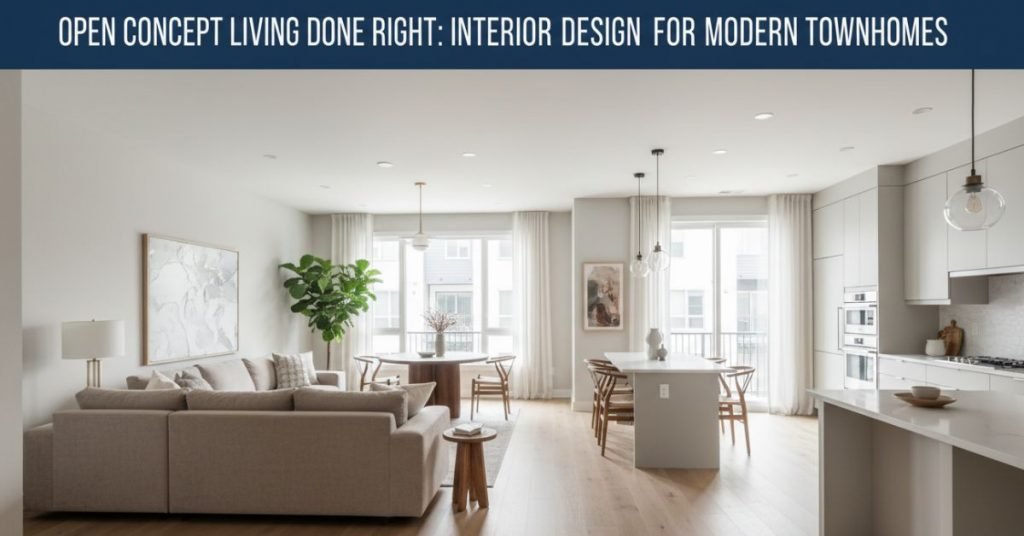
If you’re stepping into the world of modern townhome living, particularly in central NJ townhomes, you’ll likely hear the phrase open concept living bandied about frequently. Yet, although the idea of expansive, flowing interiors is appealing, achieving it in a way that truly works takes thoughtful design. In this blog, we’ll explore how to execute open concept living in townhomes with finesse: defining areas without erecting walls, creating visual unity while offering functional separation, and incorporating interior design ideas to make the most of your space. Why Open Concept Living Works for Townhomes More townhome buyers are embracing open plan layouts because they deliver: Enhanced daylight permeates through the home, creating a sense of spaciousness. Seamless connection between dining, kitchen, and living zones, ideal for entertaining or everyday family flow. Flexibility to adapt zones over time. A dining area can become a homework station; a lounge can evolve into a reading nook. In central NJ townhomes where square footage may be constrained by lot size and zoning, open concept living allows you to feel larger living spaces without necessarily enlarging the footprint. The Art of Zone Planning in Open Concept Spaces When you eliminate walls, you lose the built-in separation of functions, but you still need separation so things don’t feel chaotic. Zone planning becomes essential. Here’s how to do it: Use rugs, lighting, furniture arrangements, or ceiling texture changes to anchor each zone. For example, anchor the lounge with a large rug plus a sofa facing inward; then transition to the dining zone with a pendant light above the table. In a townhome layout, perhaps with a ground floor combining kitchen/dining/living, ensure there’s a clear path between high-traffic points (entry to kitchen, kitchen to patio, living to stairwell) so movement feels natural and unobstructed. Maintain visual continuity across zones, for instance, by repeating a color accent, a material, or a finish, so each zone feels distinct yet connected. When you’re hiring interior design specialists for your townhome, ask: how will the designer define zones without erecting traditional walls? How will the layout support everyday living and entertaining? Designing for Modern Townhomes in Central NJ: Key Considerations Scale & Furniture Placement Townhomes often have a vertical dimension (multiple floors) but narrower widths. In an open concept living arrangement: Avoid pushing all furniture to the outer walls; floating furniture clusters can enhance flow and purpose. Choose furnishings proportionate to the space: too small and the room feels unfinished, too large and it overwhelms. Lighting & Ambiance With fewer walls, lighting must adapt: Use layered lighting: ambient (overall), task (reading, dining), and accent (artwork, architectural features). Use lighting to support zones: e.g., pendants over dining, floor lamps near reading nooks, under-cabinet lights in the kitchen to define its activity. In central NJ townhomes, which may have limited natural light on certain sides, carefully placed artificial lighting becomes even more crucial. Materials, Finishes & Continuity To create flow and unity: Use consistent flooring across zones rather than switching materials, which can fragment the space. Establish a cohesive palette: neutral base, with accent colors that repeat subtly across zones (in cushions, artwork, upholstery). Incorporate banks of storage thoughtfully: open concept living leaves fewer places to hide clutter, so you should include built-in cabinetry or multifunctional furniture. Noise & Practical Live-Ability One of the challenges of open concept living is that sound and activity travel more freely. To mitigate: Use rugs, upholstered furniture, and curtains; these absorb sound. Consider the placement of loud zones (kitchen appliances, TV) relative to calm zones (reading corner, casual dining). In a townhome, the proximity of levels may also demand careful acoustical consideration (floor-to-ceiling, between stories). Putting It All Together: A Sample Scenario Imagine a central NJ townhome on the ground level with a kitchen behind the entry, a dining plateau in the middle, and a living lounge toward the rear patio. Here’s how you could plan it: Entry/Kitchen Zone: Light-coloured quartz counters, stool seating at the island, pendant lights define the zone; flooring in a warm wood tone flows throughout. Dining Zone: Immediately after the kitchen, demarcated by a large area rug under the table and a chandelier overhead. Furniture backs a low bench or console to subtly anchor the zone. Living Zone: Toward the patio doors, a sectional sofa, coffee table, and accent chairs form a conversation circle. A floor-to-ceiling statement bookshelf anchors the rear wall. A throw rug and tall lamp create a reading nook in one corner. In between these zones, without erecting walls, you could place a narrow console behind the sectional or an open shelving unit to visually separate the dining and living zones while maintaining flow. This kind of layout marries the principles of zone planning with materials continuity, all within the modern townhome context. Why Bring in Interior Design Ideas? While the concept of open concept living is appealing, the execution can be subtle and complex. Hiring an interior designer ensures: The zoning, lighting, and furniture layout are designed to your specific footprint, especially important in central NJ townhomes, where space is premium. Designed renovations are properly integrated, for example, custom built-ins, integrated lighting circuits, and seamless storage solutions. The aesthetics remain unified and functional, rather than appearing disjointed because of poorly defined zones. FAQs Can open concept living work in a narrower townhome? Yes, provided you follow zone planning principles, choose appropriately scaled furniture, and maintain visual continuity. Even in narrower footprints, well-designed open concept layouts deliver flow and spaciousness. How can I create separation without closing off the space? You can use rugs, lighting changes, furniture arrangements, partial furniture-backed partitions, or shelving units. These tools define zones without sacrificing openness. What about privacy and sound in an open concept layout? True privacy may be reduced, and sound travels more freely, but you can mitigate this through rugs, heavy curtains, acoustic panels, smart zoning (keeping quiet zones away from busy ones), and good storage to reduce visible clutter. Should I keep the same flooring throughout in an open concept space?