
Picking the Right Bathroom Tile for Wet Zones and High-Traffic Areas
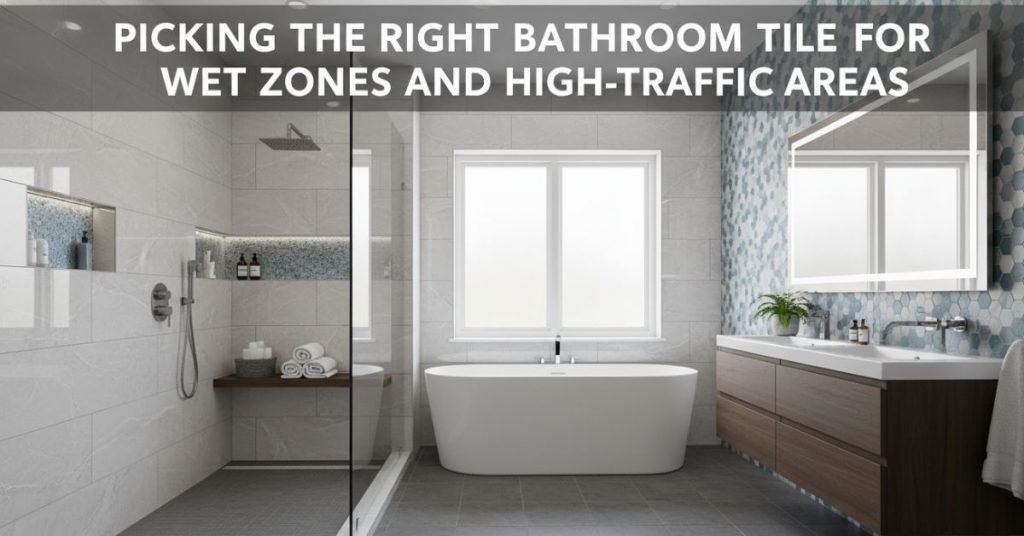
There’s something wonderfully pleasing about entering a bathroom that has perfect equilibrium, cool underfoot, good-looking on the walls, with just the right touch of cleanliness. Here’s the reality of the situation: that feeling is not based on luck. It is based on the appropriate bathroom tiles. Choosing tiles for wet areas and high traffic areas is about more than just appearance; it is about longevity. You want a short style of tile, as well as surface tile, that can deal with splashes, foot traffic, and cleaning so that your tile doesn’t fade in looks and function. Let’s discuss how to start to create the proper tile, which works fabulously throughout the life of the product, to create a final product that is both functionally based and aesthetically pleasing. Why Choosing the Right Bathroom Tiles Matters Bathrooms are hardworking spaces. Between daily showers, humidity, and constant movement, your floors and walls endure a lot. The right tiles protect your bathroom from moisture damage, provide safety against slips, and make maintenance a breeze. At the same time, tiles can completely define your bathroom’s character. From glossy ceramics to textured stone finishes, they set the tone for how your space feels, spa-like, modern, rustic, or bold. It’s where practicality meets design magic. Start by Understanding Your Zones Not every part of your bathroom needs the same type of tile. Wet zones (like showers and around tubs) demand tiles with strong water resistance and slip-resistant surfaces. High-traffic areas, such as entryways and floor space in front of sinks or bathroom vanities, need materials that can withstand pressure, dirt, and moisture, day after day. A little planning helps you mix and match materials so your bathroom looks cohesive while staying functional. Floor Tiles: Grip, Strength, and Style The floor is where durability matters most. You need something tough, textured, and beautiful. When it comes to bathroom tiles for a high-traffic area, porcelain is a tried-and-true option. Because it is dense, non-porous, and comes in limitless design options, including matte stone looks, marble designs, and any other aesthetic. If you’re looking for additional slip-resistance, you can look for a slip-resistant rating or matte finish in areas, especially if they are near showers. Natural stone tiles, like slate, granite, and more, also offer a timeless appeal. Just be sure to properly seal them so moisture can’t penetrate into them. Pro tip: If you have kids or older family members, it’s best to incorporate smaller tiles or a textured finish for more grip in wet areas. Wall Tiles: Beauty with Purpose Wall tiles don’t wear out like floors do, but they affect the structure of your bathroom by helping keep moisture and water out of the walls. Ceramic and porcelain will both work well. When considering patterns for your tile installations for impact, don’t be afraid to use tile mosaics in niches, around mirrors, or back-of-vanity accents – smaller patterned tiles can add texture to your design while remaining practical for cleaning and maintenance. Whether you use shimmering glass mosaics or ceramic blends in soft tones, they add personality to the space. When using larger tiles, you can create a more modern, spa-like backdrop. Because grout lines are often thinner in large formats, you can create a crisp, contemporary look while reducing the number of seams that retain moisture and make the space feel open and spacious. Balancing Aesthetics and Maintenance One of the biggest secrets to a stylish bathroom is picking materials you’ll actually enjoy maintaining. Some homeowners fall for high-shine tiles only to realize they show water spots or require constant polishing. Ask yourself: do you prefer the natural variation of stone, or the flawless look of porcelain? Do you like high contrast and bold veining, or something subtle and serene? Choosing the right bathroom tiles is also about designing a space you’ll love cleaning, not dread. Mix Textures and Finishes for Depth A bathroom that has only one type of tile everywhere can feel a bit flat. Mixing finishes adds interest and movement. Think about working with matte floor tiles and glossy wall tiles, or even using tile mosaics to create an accent wall. The contrast creates a beautiful reflection of light and also helps break up the space so that even smaller bathrooms can feel larger. The key is balance; everything you put into the room should complement everything else naturally. Don’t Forget the Design Flow When you are laying out your tiles, think about the design as a whole, not just for a single wall or floor. The color, shape, and texture of your tiles should also tie into other design elements in the bathroom, like bathroom vanities, mirrors, lighting, and fixtures. If your vanity features warm wood tones, consider earthy tiles like beige limestone or honey porcelain. For sleek modern designs with chrome accents, cool gray or slate tiles will match perfectly. That’s what turns basic bathrooms into beautiful ones: harmony. Considering Your Bathroom Remodel? If you’re thinking about a full bathroom remodeling project, this is your best opportunity to refresh your layout, improve ventilation, and introduce new tile combinations. Modern trends lean toward mixing large neutral tiles with small patterned sections to define areas subtly. When done right, the right mix of function and beauty can make even a compact bathroom feel luxurious. Get Professional Guidance Before You Buy Tiles are an investment, and getting them right the first time saves you money and effort in the long run. If you’re unsure which type suits your bathroom best, consider booking a bathroom design consultation. Design experts can inform you about slip ratings, moisture absorption categories, and visual layouts to help determine which tiles are both stunning and practical for everyday use. FAQs What type of tile is best for bathroom floors? Porcelain is ideal for bathroom floors. It’s durable, water-resistant, and available in various styles that can mimic stone, wood, or concrete finishes. Can I use the same tile for walls and floors? Yes, but choose tiles with the right