
Walk-In Showers vs. Bathtubs: Which Is Right for Your Bathroom?
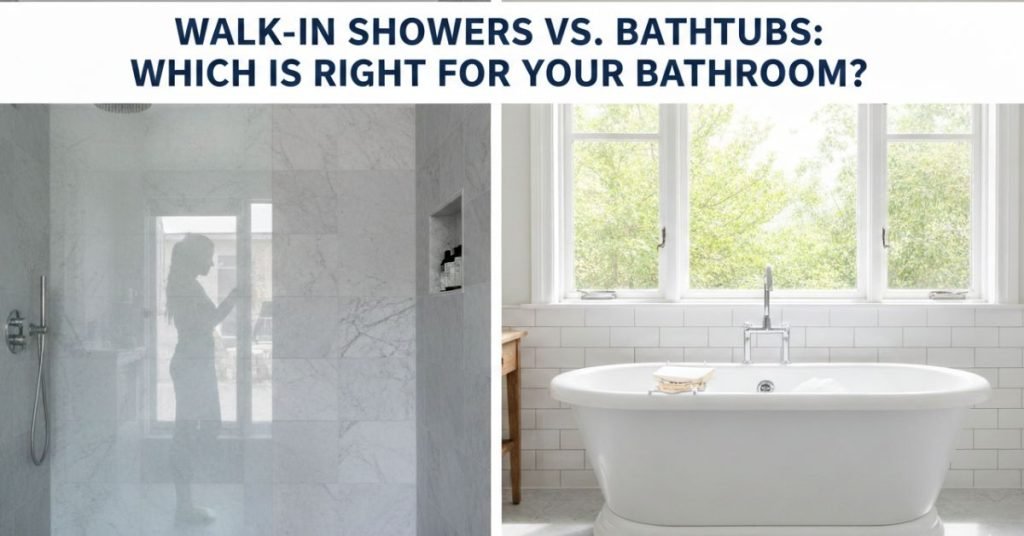
Choosing between a walk-in shower and a bathtub sounds simple until you start picturing your daily routine, future plans, and the reality of your space. One option feels modern and streamlined; the other feels classic and comforting. But the best choice isn’t about trends alone. It’s about function, lifestyle, and what your bathroom needs to do for you, every single day. This guide breaks down the showers vs bathtub decision in a practical way, without the vague “it depends” answer. You’ll learn how each option affects comfort, maintenance, style, resale value, and your overall bathroom layout, so you can make a confident call. Start With Your Bathroom Layout: Space Tells the Truth Check your bathroom layout before choosing spa-style showers and sculptural soaking bathtubs. The space in your bathroom determines how the overall space feels, in addition to what can fit in it. A cramped space with the wrong fixtures can become an obstacle every day, and a properly organized layout can make a small space feel larger and roomier. Walking showers typically outperform other shower types in small bathrooms. Walk-in showers can be constructed to eliminate the appearance of visual clutter and to have fewer transitions so that you can move freely throughout this area. Examples of walk-in shower construction include glass panels, curbless entrances, and streamlined drains. Bathtubs, on the other hand, require a dedicated footprint that can crowd a small bathroom if not planned carefully. That said, in larger bathrooms, a tub can become an intentional centerpiece rather than an awkward add-on. Your bathroom layout should guide the decision, not the other way around. The Daily-Life Factor: Showers Move Fast, Tubs Slow Things Down (In a Good Way) Walk-in showers, as a rule, blend well to support our day-to-day needs. Morning routines are typically rushed, require minimal care before us,e and tend to be the quickest option to showering due to the fact that there is no waiting for water to fill the tub. Therefore, if you typically run your home and family life based on a tight schedule, chances are that using a walk-in shower is likely your most effective and efficient option. Additionally, many options are available to customize your walk-in shower by adding benches, handheld sprayers, niches for storing shower products, etc., which makes your shower a personalized space in your home and no longer simply a generic box in the wall. On the other hand, bathtubs offer a completely opposite lifestyle. A tub is not about speed; it’s all about slowing down after a long day (especially during the cold winter months) and recharging your batteries. For some people, a tub is an outlet for relaxation, and using a bath as part of their regular routine may become ingrained in their lifestyle. If your idea of comfort involves candles, quiet, and a long exhale, tubs make sense. The real showers vs bathtub question here is: do you want your bathroom to be a pit stop, a retreat, or a bit of both? Accessibility and Aging in Place: The Quiet Decider Accessibility isn’t only a concern for later in life; it’s a comfort feature today. Walk-in showers can be easier to enter and exit, especially when designed with a low threshold or curbless entry. Add non-slip flooring, a grab bar that doesn’t look institutional, and a built-in bench, and you’ve created a bathroom that feels safer without sacrificing style. Bathtubs are the opposite: they require stepping over a rim and balancing while getting in and out. For households with young kids, that rim is manageable, and the bath is useful. For adults thinking long-term, it can be a drawback. If you’re planning bathroom remodeling, accessibility choices are worth considering early, because they affect plumbing placement, waterproofing, and structure. Installation and Complexity: What Changes Behind the Walls A shower may look simple, but it can be technically demanding, especially if you’re changing the footprint, adding multiple shower heads, or going curbless. Waterproofing must be flawless. Drain placement and slope must be precise. That’s why shower installation isn’t just “swap the fixture and go.” It’s a system. A bathtub replacement can be more straightforward if you’re installing a similar tub in the same location. But if you’re upgrading to a freestanding tub, adding a new filler, or moving plumbing, complexity increases quickly. In many showers vs bathtub projects, the cost difference comes from what you’re changing, plumbing lines, subfloor reinforcement, waterproofing layers, not the fixture itself. Maintenance and Cleaning: Be Honest About Your Patience Level Maintenance is where preferences get real. Walk-in showers often need more frequent cleaning because soap scum and water spots show on glass and tile. That doesn’t mean showers are “hard to maintain,” but it does mean your material choices matter. Large-format tile, fewer grout lines, and quality sealants can make cleaning much easier. Bathtubs can be simpler to wipe down, but they come with their own issues: scuffs, staining, and the dreaded ring if bath products build up. Jetted tubs require extra maintenance and are less popular today for that reason. If you care about low-maintenance living, build it into the design. The right finishes can make either option feel easy. Resale Value: What Buyers Expect (and What They Don’t) Resale is rarely the only reason to renovate, but it’s a smart lens to consider, especially if you might move within a few years. Many buyers like at least one bathtub in a home, particularly families with young children. If your house only has one bathroom, removing the only tub can narrow your buyer pool in some markets. However, walk-in showers are increasingly desirable, especially in primary suites. A well-designed shower can feel high-end, modern, and “move-in ready.” The key is balance: if you can keep a tub somewhere in the home and upgrade another bath with a shower, you get the best of both worlds. This is also where bathroom design matters. A bathroom that feels cohesive, spacious, and thoughtfully finished can outperform one that simply checks a “tub