
Quartz vs. Granite Countertops: Pros, Cons, and Design Tips
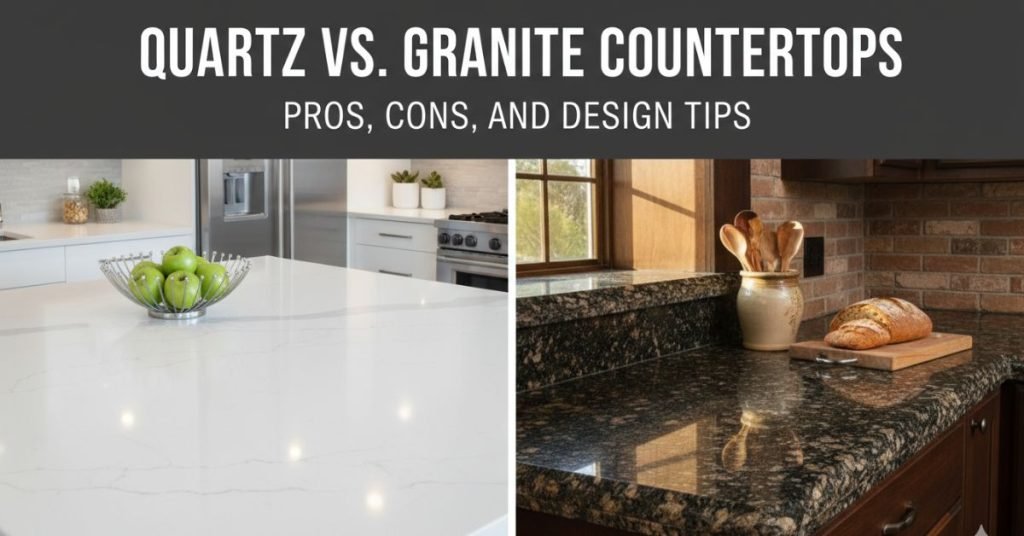
The visual anchor of the kitchen is not just the countertop; it’s the countertop that also provides a place to cook, as well as an anchor for the rest of the kitchen. It captures sunlight in the morning, provides an overall mood for the kitchen, and takes daily abuse: heat from the stove or oven, splatters from coffee or other liquids, cutting boards or knives, kids experimenting with their science projects, and the occasional red wine “oops”. Therefore, when selecting between quartz and granite for your countertop, it’s important to realize that this is not simply a design choice; it is a lifestyle choice as well. If you’re stuck deciding between quartz vs granite countertops, you are not alone, as both materials are high-end choices that look beautiful and have different benefits according to how you live, cook, and clean your kitchen. We are going to compare the practical, beauty, and future differences between these two countertop options, so that you’re in good company. Both are premium options. Both can look stunning. And both come with trade-offs that matter depending on how you live, cook, and clean. Let’s break down the real differences, practical, aesthetic, and long-term, so you can choose with confidence. Quartz vs Granite Countertops: What They Actually Are Before comparing performance, it helps to understand what you’re buying. A quartz countertop is an engineered surface made from natural quartz particles combined with resins and pigments. The result is a consistent, non-porous slab with controlled patterns and reliable performance. A granite countertop is a natural stone cut from slabs, polished, and installed as-is. Each piece is unique, with veining and mineral variation that can’t be replicated exactly. This difference, engineered consistency vs natural variation, shows up in everything from maintenance to style. Durability and Daily Life: Who Handles Chaos Better? Both materials are durable, but they respond differently to real-life kitchen use. A quartz countertop is highly resistant to staining because it’s non-porous. That means spilled oil, wine, lemon juice, or coffee is less likely to sink in if you wipe it within a reasonable time. Quartz also resists scratching well in normal kitchen conditions, though you still shouldn’t treat it like a cutting board. A granite countertop is also tough, especially against heat. Granite can generally handle hot pots better than quartz, which can be sensitive to high heat due to the resins used in manufacturing. That said, granite is porous by nature and typically needs sealing to protect against stains. In the daily battle of “kids + cooking + mess,” quartz often feels simpler. In the battle of “hot pan emergencies,” granite tends to be more forgiving. Maintenance: The Part People Forget to Ask About If you want a low-fuss kitchen, maintenance matters as much as looks. A quartz countertop is famously easy to maintain: mild soap, water, and a soft cloth are usually enough. No sealing schedule. No special products. No guessing whether something will absorb. Granite countertops require a little extra maintenance than some other types of stone material, and should be resealed periodically based on the type of granite and its use. Different types of granite have varying porosity, and sealing can be done properly; hence, granite is manageable when sealed, but it’s not a “set it and forget it” type of countertop. If you like the idea of a kitchen that stays polished with minimal effort, quartz is a strong contender in the quartz vs granite countertops debate. Style and Design: Natural Drama vs Clean Consistency A granite countertop brings natural movement and depth, swirls, speckles, veins, and mineral flecks that change in different lighting. It’s perfect if you want a kitchen that feels organic and one-of-a-kind. Granite can make neutral cabinets feel richer and give traditional kitchens that “classic luxury” look. A quartz countertop offers more predictable patterns, which is helpful if you want a modern, tailored look. Quartz can imitate marble, create soft concrete vibes, or deliver crisp, solid tones that feel clean and minimal. If you’re building a cohesive palette, quartz makes it easier to control the visual story. Your choice of countertop is an important element in kitchen design, as it can give the kitchen personality and style. If there are a lot of busy patterns in your cabinetry, backsplash, and flooring, quartz will help to create balance. Conversely, if you want to add an element of depth to your kitchen with something like granite, there is no need to spend extra money on additional decorative items for the countertop. Cost and Value: What You’re Really Paying For Stone countertop costs may vary by region, quality of slabs, thickness of slabs, type of edge profile, and number of cutouts how you feel about how much a material costs you will depend on your time and experience as a home owner. For instance, quartz countertops appeal more to residential property owners looking for low maintenance and consistent aesthetics over time than granite countertop customers looking for a naturally occurring stone that has excellent heat resistance. The appeal of each material is determined by the homeowner’s needs, wants, and experience with various types of countertops. In terms of resale value for both stone materials, if they are installed properly and selected wisely, granite or quartz can both add to the value of a home. Consider that a kitchen with an old or worn surface will give the kitchen an old or tired look, while adding a new countertop is considered a significant upgrade for the entire kitchen, even if all cabinetry remains the same. For homeowners doing kitchen remodeling, countertops tend to be one of the most visible “return-on-feel” upgrades: you see them constantly, and buyers notice them instantly. Countertop Installation: Where Success Is Won or Lost Even the best slab can look wrong if the installation is sloppy. Proper countertop installation involves accurate templating, careful seam placement, correct support, and professional finishing around sinks and cooktops. A few details that make a major difference: Seam placement should be