
There are winter luxuries that look impressive, and then there are winter luxuries you feel, every single day. Heated bathroom floors belong in the second category. They’re not flashy from across the room, but the moment your feet touch warm tile on a freezing morning, the upgrade makes perfect sense. It’s the comfort you don’t have to think about, the kind that quietly changes how your home feels in winter.
Beyond the “ahh” factor, heated bathroom floors can also be a smart investment. Sellers place a lot of focus on bathrooms, as they are often seen as a high-impact area for potential buyers. Adding heated flooring is one of the most valuable updates a homeowner can make to increase their home’s value while enhancing day-to-day comfort.
An introduction to heated floor systems, including the methods for installation, and planning on how to install heated floors without creating additional challenges.
Why Heated Bathroom Floors Feel So Good in Winter
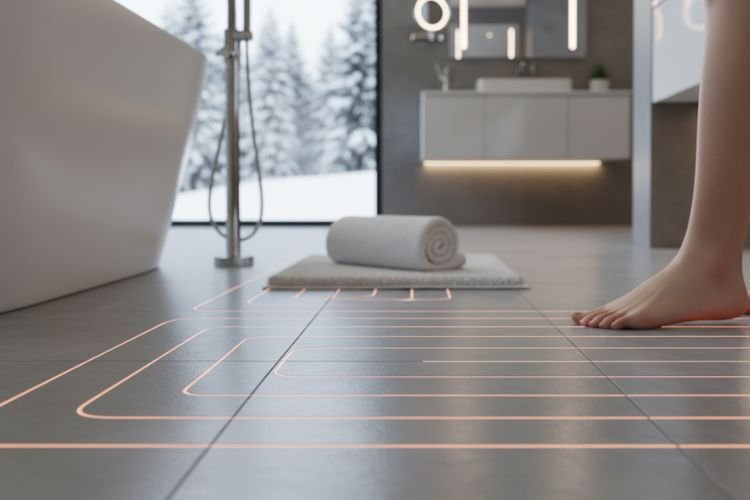
Bathrooms are naturally colder than most rooms. Tile and stone, popular for bathrooms because they’re water-resistant, also pull heat away from your body quickly. Even if your thermostat says “comfortable,” a cold floor can make the whole space feel uninviting.
Heated bathroom floors solve that problem at the source by warming the surface you actually interact with. Instead of blasting hot air that rises and disappears, radiant warmth spreads evenly from the ground up. The result is a bathroom that feels balanced, less drafty, less damp, and far more welcoming.
And yes, it’s a luxury. But it’s also a practical comfort upgrade: warm floors help reduce that lingering chill after a shower and can even speed up drying for small splashes and moisture on the floor.
Floor Heating 101: How It Works Under Tile
At its core, floor heating is simple: a system installed beneath your flooring gently warms the surface. In bathrooms, it’s most often paired with tile, porcelain, or stone because these materials conduct heat efficiently and handle temperature changes well.
There are two main types of floor heating you’ll hear about:
Electric radiant heating
Under tile (electric) systems use either heat cable or mesh mat systems installed under the tile. These systems have become increasingly popular in bathrooms due to the simplicity of installing electric under tile systems, as electric systems heat up quickly. For the average homeowner who wants to install heated bathroom floors in a single bathroom, electric systems offer the simplest route.
Hydronic radiant heating
Hydronic heating systems use pipes to pump heated water beneath the floor to provide radiant heating. While they are typically used in larger renovations, full home systems, or new construction where there is adequate supporting infrastructure, hydronic can be an efficient method of heating; however, for a basic bathroom renovation, hydronic is often more complicated than electric.
The “best” system depends on your home, your goals, and the scale of your project, not just the technology itself.
Is This Worth It? Comfort, Cost, and Value in One Upgrade
Some upgrades look good in listing photos. Others improve your daily life. Heated bathroom floors do both.
They provide a warm feel and comfort level unmatched, as you spend time in your bathroom nearly every day (morning, night, and often overnight). The warm flooring also provides a calming feel to the overall room, which improves your perception of the space without altering your daily routine.
From a value standpoint, they fit neatly into the category of “small luxury signals.” Buyers may not expect it, but they remember it. And in competitive markets, memorable details help your home stand out, especially when paired with other bathroom upgrades like modern lighting, better ventilation, and sleek fixtures.
Speaking of bathroom upgrades, heated floors also complement energy-smart living. You may be able to keep the bathroom air temperature slightly lower while still feeling comfortable, because the warmth is where it matters.
Planning the Upgrade During a Bathroom Remodelling
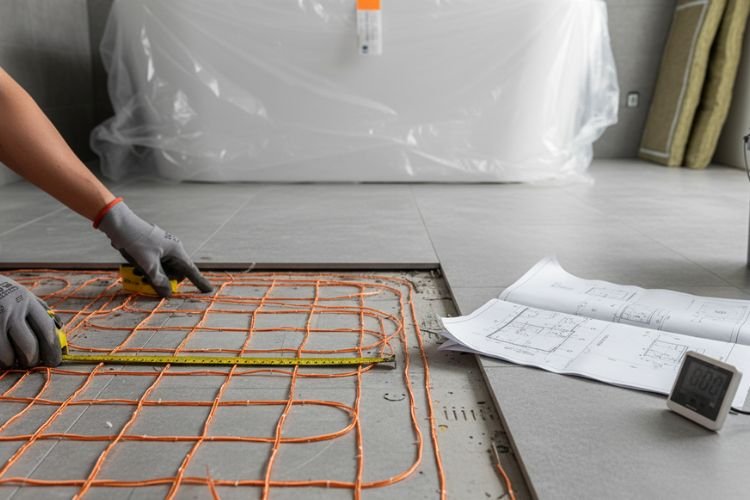
If you’re already opening the floor, adding radiant heat is much easier. The ideal time to install heated bathroom floors is during a bathroom remodel, when tile is coming up, and the subfloor is accessible. This is when your installer can properly prep the surface, lay the heating system, and re-tile without awkward workarounds.
A well-planned project will include details people forget until it’s too late: floor height changes, transitions to adjoining rooms, waterproofing layers, and thermostat placement. Heated systems add a little thickness, and that can impact door clearance and trim, small things that matter in a finished bathroom.
If your bathroom is staying mostly the same but you’re replacing flooring, it can still be done; just make sure the scope includes the prep work needed for a reliable installation.
Best Flooring Choices for Heated Bathroom Floors
Ceramic tile has been the traditional partner for radiant heat as it transfers warmth well and holds up extremely well in humid environments. Porcelain tile is often a popular choice because it is very dense, extremely durable, and comes in many different styles and finishes, including stone-type looks and mattes that are excellent at hiding water spots.
Although natural stones will work effectively, they need to be sealed and maintained regularly. Luxury vinyl (LVF) could also be used in a bathroom environment if the manufacturer’s recommended specifications exist, but typically it is best to install either tile or stone for long-term durability as well as performance-related reasons.
A flooring consultation helps save time and money by offering suggestions on how to avoid issues such as using mismatched materials, incorrect adhesives, or selecting the wrong tile for the heat produced by the floor and high moisture.
Installation Details That Make or Break the Result
Installation details can make or break the finished product. Thermal flooring is hidden from view, and therefore, there are no second chances in getting it right.
Proper planning is essential for the successful installation of a heated floor.
- Subfloor Preparation: Subfloor preparation ensures that the subfloor is completely flat and has a stable base to prevent tile from cracking and to help your tile retain heat evenly.
- Proper Thermostat Control: The use of a programmable thermostat allows for accurate control over your comfort level and energy cost without having to rely on others to assist you.
- Moisture Protection: Ensure that your bathroom has proper moisture protection through the use of waterproofing membranes in wet areas only and a high-quality vapor barrier underneath your tiles.
- Electrical work: It should also comply with national and local electrical codes; if not, you could face legal repercussions for using an illegal electrical system.
Heated bathroom floors should also be installed by qualified professionals. If installed correctly, heated bathroom floors are quiet and dependable. You will most likely not pay attention to them anymore until you feel how nice it is to have them in the winter when visiting a friend’s or relative’s bathroom.
Everyday Use: What It Feels Like to Live With Heated Floors
This isn’t the kind of luxury you use “sometimes.” It becomes part of your winter baseline.
Most people set their system to warm up before the morning rush, then lower it during the day. The heat is gentle, not scorching, more “sun-warmed tile” than “hot surface.” Paired with smart bathroom upgrades like a humidity-sensing fan and layered lighting, your bathroom starts to feel like a small private retreat instead of a cold stopover.
FAQs
Do heated bathroom floors use a lot of electricity?
Electric systems can be efficient when used strategically, especially with a programmable thermostat. Because bathrooms are smaller spaces, the operating cost is often manageable, but it depends on usage patterns and local energy rates.
How long does floor heating take to warm up?
It varies by system type, flooring material, and insulation beneath the floor. Many electric systems warm noticeably within 30–60 minutes, while thicker tile beds or stone may take longer to fully reach the target temperature.
Are heated bathroom floors safe around water?
Yes, when installed correctly with proper waterproofing and code-compliant electrical work. Bathrooms are a common use case for radiant systems, but professional installation is key.
Can I add heated floors without a full bathroom remodelling?
Sometimes, yes, especially if you’re already replacing the flooring. However, the easiest and cleanest time to install heated bathroom floors is when tile is being removed, and the subfloor is accessible.