
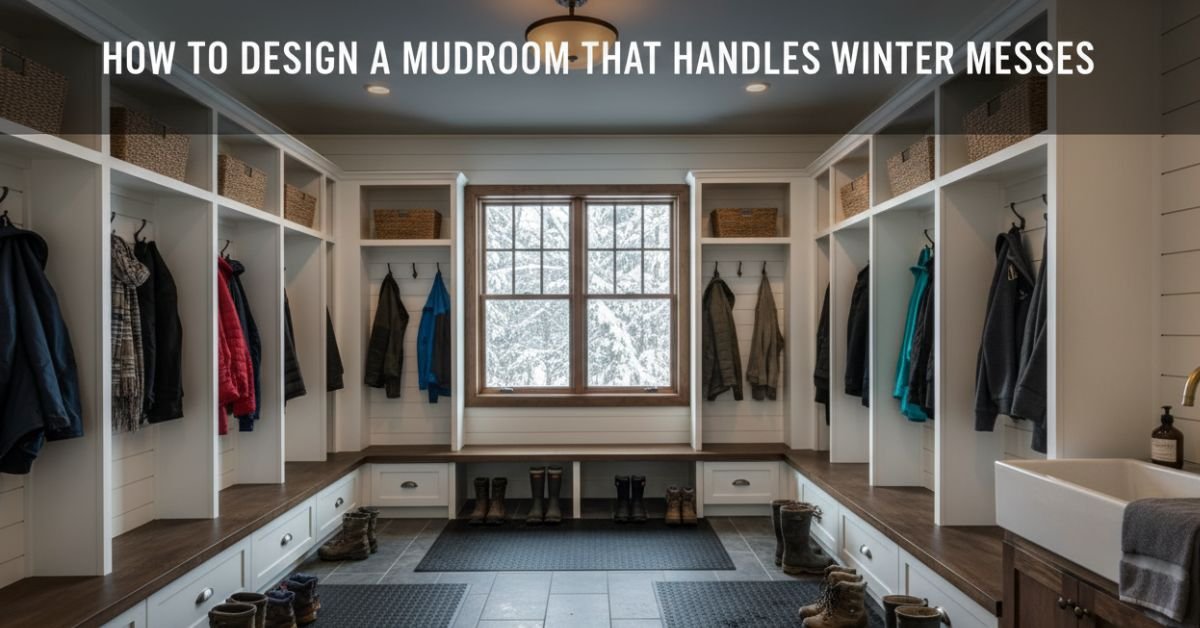
The front door can become a disaster zone during the winter due to snow and wetness. On a snowy day, the floor becomes a slip hazard, the hallway smells damp, and the gloves are nowhere to be found. With a well-planned mudroom design, you will have an area of the home dedicated to storing any wet and muddy items before they make their way onto the floors of the house.
The purpose of the mudroom is not to create a “perfect” environment for winter. The purpose is to contain the mess from winter and create an easy-to-navigate area that will help you navigate your home during the winter months with ease. A well-designed mudroom will also reduce the number of dirty footprints in your home, provide a place for finding your boots easily, and provide an area to store your coats in an organized manner.
All mudrooms, whether they are considered a separate space within a home or if they are simply a “nook” created in an entryway or hallway, should take into consideration specific guidelines. These guidelines typically include defined areas for use, smart storage solutions, and durable material(s) that can withstand moisture.
Mudroom Design Starts With the Winter Routine, Not the Décor
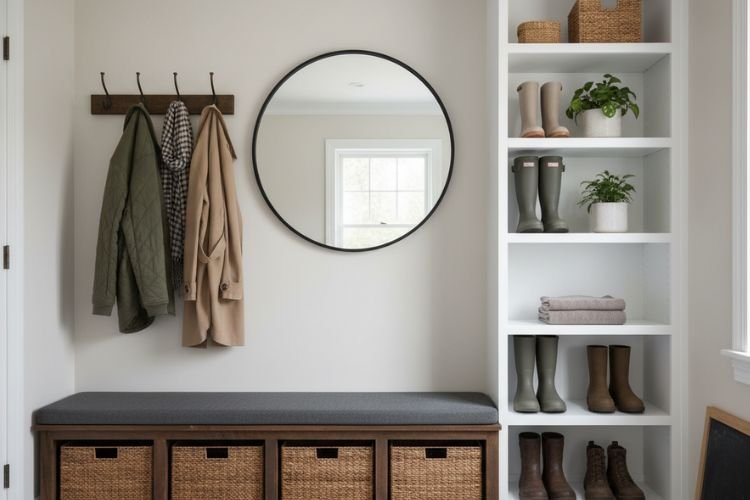
It’s best to think about mudroom design in relation to how people interact with their mudrooms rather than simply considering design features like tiles or hooks. Most people’s patterns when they arrive home from work in the colder months include: entering the house, removing boots, setting down bags, hanging up coats, trying to clear snow off, and attempting to locate keys. The most effective mudroom design creates an environment that supports this pattern seasonally without needing encouragement to encourage people to use it correctly.
Most functional mudrooms provide three separate areas of function:
- Drop Zone: Where you drop items like keys (wallet, bags, phone, etc.). These types of items usually end up cluttering the kitchen countertop after you get home.
- Wet Zone: Where you place boots, umbrellas, wet/damp coats, and wet/damp paws/feet, etc. (these types of items transport moisture and dirt into your home).
- Reset Zone: Where you can sit down, take off your coat and footwear, and leave winter behind you before entering your home.
When a mudroom has these three areas clear, it has an opportunity to function as a transition area versus a point of traffic congestion.
Choose Durable Flooring That Can Take a Beating
Winter mudroom floors are exposed to salt, grit, slush, and puddles, often multiple times a day. That’s why durable flooring is the backbone of the room. If the floor can’t handle winter, the rest of the mudroom won’t matter.
When selecting tile or other flooring materials for a mudroom, porcelain tiles are an excellent selection due to their natural properties. Porcelain tiles are waterproof, scratch-resistant, and stain-resistant, making them very easy to care for. Additionally, they provide a matte surface, which helps conceal water stains and prevents slipping. Luxury vinyl plank flooring can also be a strong option in mudrooms where homeowners would like a warmer surface underfoot; however, it must be truly waterproof and must be properly installed to avoid damage. Sealed stone or sealed concrete flooring can also be a good option for mudroom flooring, providing the surface is not overly smooth, as this can make transitions from one flooring to another more difficult.
Here’s the secret to making durable flooring even more effective: give it a “buffer runway.” If you can extend the hard surface a few feet beyond the door, you’ll catch meltwater and grit before it reaches wood floors or rugs.
Build Home Storage Solutions That Match Bulky Winter Gear
Winter items are not delicate. They’re puffy, oversized, and frequently wet. If your storage is shallow or cramped, you’ll end up with a pile every time. The right home storage solutions are designed for volume and ventilation.
Start by thinking vertically. Tall cubbies, wall hooks, and upper cabinets keep the floor open and make cleaning easier. Then mix open and closed storage so the mudroom feels practical but not chaotic.
- Open storage works best for daily items: coats, backpacks, dog leashes, and frequently used footwear.
- Closed storage is ideal for visual calm: hats, gloves, scarves, and “extras” that look messy when exposed.
The strongest home storage solutions also help the room reset quickly. When each person has a dedicated zone, even a small one, cleanup becomes automatic instead of a daily argument.
Add a Drying Strategy So Your Mudroom Doesn’t Smell Like Damp Socks
When a mudroom keeps wet things without drying them, it becomes a damp area full of moisture and eventually mould, bacteria, and smells build up. Keeping your winter-ready mudroom organized should lead to a more organized and functional space.
Include a boot tray with raised edges so meltwater stays contained. Use hooks spaced wide enough for bulky coats so they can air out instead of staying layered and wet. If your mudroom is enclosed, ventilation matters, whether that’s a well-placed vent, a small fan, or even a door that allows airflow.
This is also a great point to bring in a home design consultation if your entry space feels tight or awkward. A designer can spot airflow issues and layout fixes you might not notice, like shifting hook placement, changing a door swing, or adjusting storage depth for better circulation.
The Bench: The One Feature That Makes Everything Easier
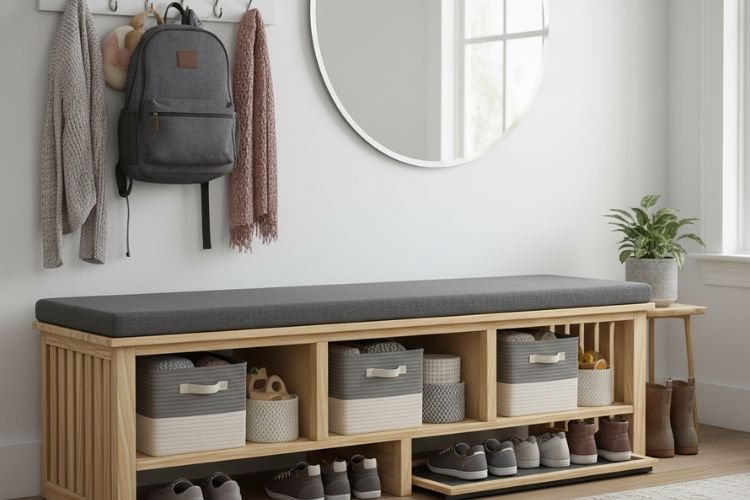
A bench turns winter entry into a calmer routine. It gives you a place to sit while removing boots, helps kids handle snow gear without falling over, and keeps bags off the floor.
In a good mudroom design, the bench should work hard. Built-in benches with drawers keep clutter out of sight. Lift-top benches are great for bulky items like snow pants or spare gloves. Even a narrow wall-mounted bench can make a big difference in a tight space.
Install a bench so that the order in which people enter your home (step onto, sit on, remove boots and gear), will be as efficient as possible. Installing a bench in this order reduces the chance of wet, slushy messes in the house, as well as making sure that no one walks through the house with half of their clothing removed.
Wall Protection and Lighting: The Quiet Details That Save You Later
Winter mess doesn’t just affect your floors; wet coats and boots end up being wiped against the walls; scuffed baseboards by boots; torn wallpaper from dog leashes scraping against corners, etc. To extend the life of your mudroom, be sure to use washable paint and install beadboard or wainscoting at all points of contact (walls, baseboards, etc.). This way, you can continue to enjoy the open area for a long time.
Lighting is also essential during winter when the days are short and dark; therefore, a bright overhead lighting source will help you use the space more efficiently, whereas an under-shelf light will enhance the finished look of your mudroom. These types of details add an additional element of value to your mudroom, going beyond just the functionality, to create a unique purpose for your mudroom.
A bigger structural change, like widening an entry, relocating a closet, or carving out space from a laundry room, often falls under entryway remodeling, which can be worth it if your current entry is a recurring pain point. When the entry is functional, the whole home feels more organized.
Make Cleaning Easy, Because Winter Is Relentless
If it takes you too long to clean up after a day’s worth of winter activities in your mudroom, you will not do it every day. Therefore, the mess will just keep spreading throughout your entire house. It should be as simple to reset after using your mudroom for winter activities. Be sure to have a vacuum handy, keep some towels for drying wet paws, and have surfaces in your mudroom that do not require extra care.
Great home storage solutions help here, too. When the floor stays clear, quick cleaning becomes possible: shake mats, wipe the tray, vacuum grit, done. That’s the winning formula.
Also, revisit the importance of durable flooring: winter salt and grit can chew through delicate materials quickly. A tough surface plus easy cleanup routines keep your mudroom looking good all season.
FAQs
What is the most important element of mudroom design for winter?
A clear wet zone with durable flooring and a drying plan. When moisture and grit are contained at the door, the rest of the home stays cleaner and more comfortable.
Which durable flooring works best for muddy, snowy winters?
Porcelain tile and properly installed water-resistant vinyl are common favorites. The best durable flooring is slip-resistant, easy to clean, and tough enough to handle salt and grit.
How do home storage solutions prevent clutter from spreading?
They create a “home” for every item, boots, coats, accessories, bags, so things don’t end up on chairs and counters. Home storage solutions work best when they include both open daily storage and closed clutter control.
Can I build a functional mudroom in a small entryway?
Yes. Even a narrow space can work if you go vertical with hooks and cubbies, add a compact bench, and prioritize durable flooring plus a boot tray to manage meltwater.