

The holidays have a special talent for turning “I’ll deal with it later” into “Why did we start this now?” It’s easy to feel overwhelmed while juggling guests, ongoing travel plans, having extra family over to enjoy your home, finishing year-end deadlines, and more general chaos inside. However, all of these factors create huge obstacles for many families who live in homes that need renovations done to accommodate all visitors, whether it’s the tiny kitchens being used for hosting, a bathroom that doesn’t work for visitors, or a storage room that feels like a full-time job in terms of organizing things.
Renovations do not have to be avoided during the Holiday Season, but they must be planned so that everything remains happy and enjoyable. With some good planning strategies, you can make use of the slower winter months to help you make sound decisions, keep a timeline, and keep everything in check, almost preventing your home from being torn up into a construction site at the worst possible time.
This guide offers you some simple and low-key suggestions for how to plan and prepare a renovation while you’re in the midst of celebrating the Holiday Season.
Start With a “Holiday-Proof” Renovation Goal

Holiday renovations go sideways when the goal is vague. “We’ll redo the kitchen” sounds exciting until you’re choosing backsplash tile while also ordering gift wrap and coordinating guests. Instead, define a goal that fits the season.
Ask yourself: what would make life easier right now, and what can wait until the holiday dust settles? A smart home renovation goal during this period usually falls into one of two categories:
- Planning now, building later: You use the season to make decisions, confirm pricing, and schedule the work for after major gatherings.
- Small upgrades that reduce holiday friction: Think lighting, paint, storage tweaks, or hardware, projects that don’t disrupt plumbing, cooking, or daily routines.
This focus is the backbone of stress-free renovation planning because it limits last-minute decisions and protects the spaces you rely on most.
Choose the Right “Renovation Window” Instead of a Random Start Date
The start date for renovations is a common error many people make, and often do not take into account their personal situation before beginning renovation work. A busy schedule due to holiday operations or travel may dictate an immovable time frame, and contractor scheduling must align accordingly.
You should use these three “Windows” to develop a renovation plan:
- Pre-Holiday Window: This window allows for high-impact updates (minor repairs, upgrades, etc.) to be made before guests arrive.
- Holiday Pause Window: This window protects the home from any disruptions and should be considered “off-limits”. This means that during this time, you will want to ensure that your home is functional, clean, and ready for guests.
- Post-Holiday Window: This window signifies that the *real* work will begin after the holidays, including demolition and heavy construction work.
By having this structure, your home renovation will not overwhelm your holiday season and will allow your contractors the opportunity to effectively plan for a successful renovation without any delays or rushed jobs.
Create a Renovation Budget That Includes Holiday Reality
Holiday budget stress is the quickest way to burn out during this time of year. Without a clear outline of your costs, every decision you make will feel like a mini-crisis. Constructing a renovation budget based on your actual costs will help to alleviate the stress of holiday spending and unexpected expenses you will incur throughout the renovation process.
First, identify the core renovation expenses incurred by the project, including labor, material, and permit costs, and then add to that a line item for the miscellaneous items that will arise as part of your renovation project, including temporary storage and delivery fees (particularly for materials), disposal of debris from the project, and the potential costs of repairs of items hidden behind walls. In addition to the unforeseen expenses that may arise, holiday spending will increase the likelihood of incurring costs beyond what was originally budgeted for.
A tip to consider would be to include a contingency line item in your renovation budget that you will not use to mentally pre-spend the contingency. This would be a cushion to help maintain your calm during the project if there are unexpected expenses that arise.
Lock in Decisions Early to Avoid December Decision Fatigue
The month of December is not the time to be wishy-washy about the types of fixtures you will use for your renovation project. If you want a successful and smooth renovation project, you can make it easier on yourself by making your main fixture selections early in the season, before the holiday invites arrive and your focus shifts (multiple times) to holiday decorations, food, and shopping!
Prioritize selections that can cause delays if they’re late:
- flooring and tile
- cabinetry or vanities
- appliances
- lighting (especially if lead times apply)
You don’t need to finalize every decorative detail immediately, but your big-ticket items should be chosen and ordered on a clear schedule. Strong renovation planning is less about spreadsheets and more about removing decision bottlenecks before they become emergencies.
Protect Your Daily Life With a Simple “Function Plan”
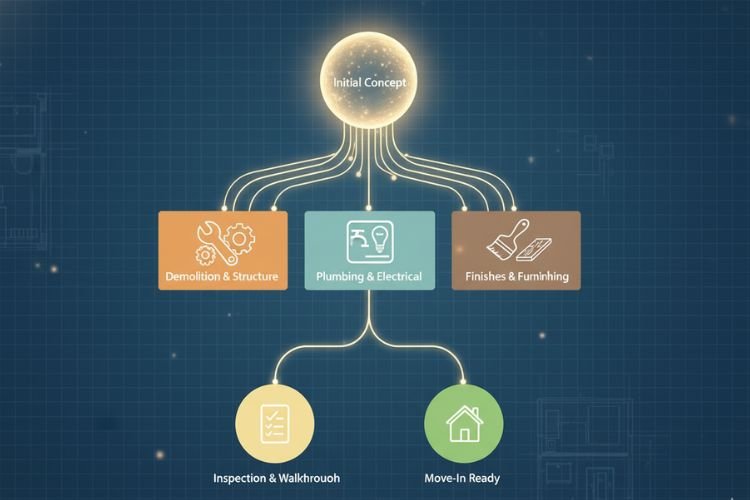
A renovation can be exciting, but when renovations begin, it’s hard to even think about your coffee routine “living” somewhere else while everything is already busy in your house.
To protect your daily life from disruption, you need to establish a basic function plan that includes: Where and when will you cook? Where and when will you bathe? Where and when will you work? Where or when will you relax?
If home renovations will impact the kitchen, create a temporary beverage/snack station elsewhere in the house. If there will be a temporary loss of access to a bathroom, create an organized morning schedule for everyone to follow so that no one gets stuck in line during rush hour. You will find that your stress level will decrease rapidly.
A well-scoped interior remodeling project should come with this kind of practicality built in, not treated like an afterthought.
Communicate Boundaries to Contractors and Family (Yes, Both)
Holidays blur boundaries. People pop in, plans shift, and “just one more task” becomes a habit. A renovation needs guardrails.
Contractor contracts should identify contract working hours, noise levels during work, where to put material when it’s not working on a project, and areas of the house that should not be accessed. Family members should define what will not be changing during the project, and the timeline for any changes that will take place. Establishing these guidelines allows everyone involved in the home renovation to better understand how the renovation will proceed.
Once you have chosen contractors, if you realize you are experiencing decision fatigue and/or lacking time to devote to making choices, consider using the design consultation services provided by some contractors, as they will assist you in making decisions, combined with your contractor’s final selection, so there won’t be decisions that don’t fit. In addition, well-thought-out and planned designs save you money by preventing you from paying for things twice and/or upgrading because of decisions made in haste.
Build a Renovation Planning Checklist That Fits Holiday Life
You don’t need a complicated project management system. You need a clear list you can trust. A holiday-friendly checklist keeps progress moving without dominating your attention.
Here’s a simple structure:
- This week: finalize scope, confirm measurements, and lock the timeline.
- Next week: order long-lead items and confirm delivery logistics.
- Before work starts: clear staging areas, protect floors, and plan daily routines.
This style of renovation planning works because it stays realistic. It respects the fact that you still have dinners to host and people to see.
Keep the Finish Line Visible: Define “Done” Before You Start
The best way to avoid the stress of the holiday season and having nothing to show for it is to develop a clear definition of what “done” means prior to the start of construction. For example, does “done” mean you have a newly remodeled kitchen, or was it just completed on paper, with temporary lighting, and planned for later installation? Is it a complete remodel of the bathroom, or a basic upgrade?
Establishing clear definitions helps protect your time by eliminating scope creep; that is, the unplanned addition of “just one more thing,” which leads to either overspending or extending your project’s time.
A good home renovation is not just chaotic, but has a purpose and a plan, even when things are busy.
FAQs
Should I start a home renovation during the holidays?
You can, but it’s usually smarter to plan during the holidays and schedule major work afterward. That way, you get the momentum without sacrificing comfort, hosting, or daily routines.
How do I keep renovation budget stress from ruining the season?
Build a renovation budget that includes contingency and holiday spending realities. Clear numbers reduce emotional decisions, and contingency protects you from surprise costs.
What’s the best way to handle renovation planning when I’m busy?
Break it into weekly steps, lock major decisions early, and avoid multitasking big selections during peak holiday weeks. A simple checklist beats a perfect plan you never follow.
How can I avoid delays once the holidays are over?
Order materials early, cofirm lead times, and align contractor scheduling with deliveries. Good renovation planning is mostly about timing, getting the right pieces in the right order.